
Free open source software (FOSS): licensing, co-development, and the technical economy

Free open source software (FOSS): licensing, co-development, and the technical economy
Free, open source software Free and open-source software has several terms and abbreviations: (F/OSS, FOSS) or (free/libre/open-source software) and abbreviated to (FLOSS), (the word libre is a French word that means free) It is software licensed under a free license that gives users the right to use, study, change, and improve the program by obtaining the source code. This approach has gained wide acceptance and support from individuals and companies because of the advantages it brings. Free and open source software (FOSS) is free and open source software where anyone is freely licensed to use, copy, study and change the software in any way and the source code is shared openly so that people are encouraged to voluntarily improve the design of the software. This is in contrast to proprietary software, where the software is subject to a restrictive copyright license and the source code is usually hidden from users. FOSS reserves the civil liberty rights of the software user (see the four fundamental freedoms below). Other benefits of using FOSS can include lower software costs, increased security and stability (particularly with respect to malware), protecting privacy and education, and giving users more control over their own devices. Free and open source operating systems such as Linux and its descendants Berkeley Software Distribution are widely used today, powering millions of servers, desktop computers, smartphones (such as Android), and other devices. Free software and open source licenses are used in many software packages. The free software movement and the open source software movement are online social movements behind the production and widespread adoption of free and open source software, with the former preferring to use the terms FLOSS or free/libre.
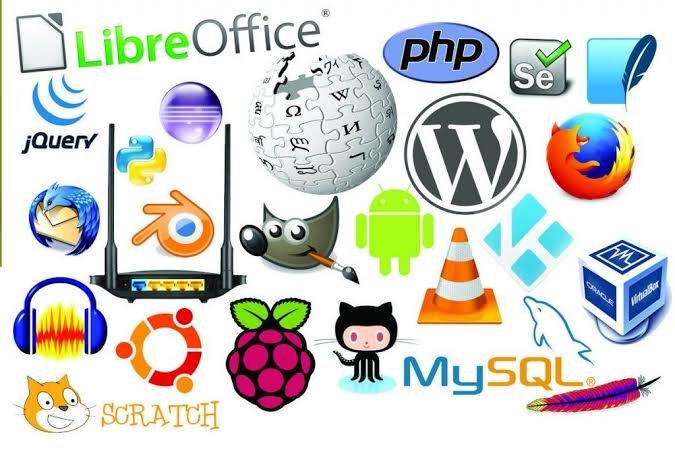 Free and Open-Source Software (FOSS) Ecosystem: Examples of Leading Open-Source Tools and Platforms
summary
Free and open source software (FOSS) is an umbrella term for software that is both free software and open source software. FOSS (Free and Open Source Software) allows the user to inspect source code and provides a high level of control over the software's functionality compared to proprietary software. The term "free software" does not refer to the financial cost of the software at all, but rather to whether the license preserves the civil liberties of the software user ("free" as in "freedom of speech," not "free beer"). There are a number of terms and abbreviations related to free and open source software (FOSS or F/OSS), or free/free and open source software (FSF or F/LOSS is preferred by FOSS over FOSS, while free or free/libre is their preferred term). Although there is almost complete overlap between free software licenses and open source software licenses, there is strong philosophical disagreement between advocates of these two positions. The terms Free and Open Source Software or "Free and Open Source Software" were created to be neutral on these philosophical disagreements between FSF and OSI and to have a unifying term that can refer to both concepts.
Free software
Richard Stallman's definition of free software, adopted by the Free Software Foundation (FSF), defines free software as a matter of freedom rather than price, and supports the four fundamental freedoms. The first known definition of the idea of free software was in the February 1986 edition of the now-defunct GNU's Bulletin. The primary source for the document is in the Philosophy section of the GNU Project website. As of August 2017, it has been published in 40 languages.
Four fundamental freedoms of free software
To meet the definition of “free software”, the FSF requires that a software license respect the civil liberties/human rights of what the FSF calls the “four fundamental freedoms” of the software user.
-
Freedom to run the program as you wish and for any purpose (Freedom 0).
-
The freedom to study how the program works, and change it to do your computing as you wish (Freedom 1). Access to the source code is a prerequisite for this.
-
Freedom to redistribute copies so you can help others (Freedom 2).
-
Freedom to distribute copies of your modified versions to others (Freedom 3). By doing this, you can give the entire community a chance to benefit from your changes. Access to the source code is a prerequisite for this.
Open source
The open source definition is used by the Open Source Initiative (OSI) to determine whether a software license is eligible for the Enterprise Badges for Open Source Software. The definition was based on the Debian Free Software Guidelines, written and modified primarily by Bruce Perens. Perens did not base his writing on the Four Fundamental Freedoms of Free Software from the Free Software Foundation, which were only later available on the web. Perens later stated that he felt Eric Raymond's promotion of open source had been unfairly overshadowed He supported the efforts of the Free Software Foundation and emphasized his support for free software. In the 2000s, he spoke about open source again.
History
From the 1950s through the 1980s, it was common for computer users to have the source code for all software they used, and the permission and ability to modify it for their own use. Software, including source code, is generally shared by individuals who use computers, and is often public domain software Note that free and open source software is not the same as public domain software, because public domain software does not carry copyright Most companies have a business model based on hardware sales, and provide bundled or bundled software with the hardware for free. By the late 1960s, the prevailing business model around software was changing. The growing and evolving software industry was competing with hardware manufacturers' bundled software products; Instead of funding software development from hardware revenues, these new companies were selling software directly. Leased hardware required software support with no revenue provided for software, and some customers who were able to better meet their own needs did not want software costs bundled with hardware product costs. In the United States vs. The government accused IBM, in January 17 1969, that bundled software was anticompetitive. While some software was still provided without cash cost and license restrictions, there was an increasing amount of software that was only at cash cost with a restricted license. In the 1970s and early 1980s, some parts of the software industry began using technical measures (such as distributing only binary copies of computer programs) to prevent computer users from using reverse engineering techniques to study and customize software they had paid for. In the year 1980, copyright law was expanded to include computer software in the United States. Previously, software could be considered Computer ideas, procedures, methods, systems and processes that are not protected by copyright. Early on, closed source software was uncommon until the mid-1970s through the 1980s, when in 1983 IBM implemented an "object code only" policy, and no longer distributed source code. In 1983, Richard Stallman, a longtime member of the hacker community at the Artificial Intelligence Laboratory at MIT, announced the GNU Project, saying that he was frustrated by the effects of the change in the culture of the computer industry and its users. Software development for the GNU operating system began in January 1984, and the Free Software Foundation (FSF) was founded in October 1985. An article summarizing the project and its goals was published in March 1985 under the title The GNU Manifesto. The manifesto included an important explanation of the GNU philosophy, the definition of free software, and "copyleft" ideas. The FSF takes the position that the fundamental issue addressed by free software is an ethical one – ensuring that software users are able to exercise what it calls the "four fundamental freedoms". The Linux kernel, created by Linus Torvalds, was released as freely editable source code in 1991. Initially, Linux was not released under a free software license or an open source software license. However, with version 0.12 in February 1992, he re-licensed the project under the GNU General Public License. FreeBSD and NetBSD (both derived from 386BSD) were released as free software when USL v. The BSDi lawsuit was settled out of court in 1993. OpenBSD was forked from NetBSD in 1995. Also in 1995, the Apache HTTP Server, commonly referred to as Apache, was released under the Apache 1.0 License. In 1997, Eric Raymond published The Cathedral and the Bazaar, a reflective analysis of the hacker community and the principles of free software. The paper received significant attention in early 1998, and was one of the factors in motivating Netscape Communications Corporation to release the popular Internet suite Netscape Communicator as free software. Today this code is known as Mozilla Firefox and Thunderbird. The Netscape Act prompted Raymond and others to consider how free software ideas could be presented to the FSF and the perceived benefits to the commercial software industry. They concluded that the FSF's social activism was not attractive to companies like Netscape, and looked for a way to rebrand the free software movement to emphasize the potential for businesses to share and collaborate on software source code. The new name they chose was "Open-source", and Bruce Perens, publisher Tim O'Reilly, Linus Torvalds and others soon signed on to rebrand. The Open Source Initiative was created in February 1998 to encourage use of the new term and spread open source principles. While the Open Source Initiative sought to encourage use of the new term and evangelize the principles to which it adhered, commercial software vendors found themselves increasingly threatened by the concept of freely distributed software and universal access to application source code. A Microsoft executive publicly stated in 2001 that “open source is a destroyer of intellectual property.” “I can’t imagine anything that could be worse for the software sector and the intellectual property business.” This opinion perfectly sums up the initial response to this software by some software companies. For several years FOSS has played a niche role outside the mainstream of proprietary software development. However, the success of FOSS operating systems such as Linux and BSD and FOSS-based companies such as Red Hat has changed the position of the software industry and there has been a major shift in corporate philosophy regarding FOSS (Free and Open Source Software) development.
Use
Free and open source software benefits from proprietary software
Personal control, customization, and freedom
Users of free and open source software benefit from the four fundamental freedoms to freely exploit, study, copy, modify, and redistribute this software, with or without modification. If they wish to change the functionality of the software, they can make changes to the code and, if they wish, distribute these modified versions of the software or often depending on the decision-making model of the software and its other users until payment or demand these changes must be made via updates to the original software.
Privacy and security
Manufacturers of proprietary closed source software are sometimes under pressure to build in backdoors or other secret and unwanted features into their software. Instead of having to trust software vendors, FOSS users can examine and verify the source code themselves and can place trust in a community of volunteers and users. Since proprietary code is usually hidden from public view, only vendors themselves and hackers may be aware of any vulnerabilities in it while FOSS involves as many people as possible to quickly uncover bugs.
Low or no costs
Free and open source software is often free, although donations are often encouraged. This also allows users to better test and compare software.
Quality, cooperation and efficiency
Free and open source software allows better collaboration between various parties and individuals with the aim of developing the most efficient software for its users or use cases while proprietary software is usually aimed at generating profits. Furthermore, in many cases, organizations and individuals contribute more to such projects than to proprietary software. Technical superiority has often been shown to be the main reason why companies choose open source software.
Disadvantages compared to proprietary software
Security and user support According to Linus' law, the more people who can see and test a block of code, the more likely they are to quickly discover and fix any defects. However, this does not guarantee a high level of participation. Having a group of professionals working full-time behind a commercial product can be better in some cases than free and open source software. Furthermore, public source code may make it easier for hackers to find vulnerabilities and write exploits. However, this assumes that these malicious hackers are more effective than white hat hackers who responsibly disclose or help fix vulnerabilities, that no code leaks or leaks occur, and that reverse engineering of proprietary code represents a significant barrier to malicious hackers. Hardware and software compatibility
Sometimes, FOSS is not compatible with specific hardware or software. This is often due to manufacturers holding back FOSS, such as by not disclosing the interfaces or other specifications needed for members of the FOSS movement to write drivers for their devices – for example, because they want customers to only run their own software or what they might gain from partnerships.
Bugs and missing features
While FOSS can outperform its counterparts in terms of software features and stability, FOSS in many cases contains unstable bugs and missing features when compared to similar commercial software. This varies depending on the situation and usually depends on the level of interest and participation in the FOSS project. Furthermore, unlike typical commercial software, missing features and bug fixes can be implemented by any party with the motivation, time, and relevant skill to do so.
Less development guarantee
There is often less certainty that FOSS projects will receive the required resources and engage in ongoing development compared to commercial, company-backed software. However, companies also often cancel projects for being unprofitable, however large companies may rely on open source software and thus participate in its development.
Missing applications
Because FOSS distributions for Linux have a smaller market share for end users, there are also fewer applications available.
Adoption by governments
| Jurisdiction | Adoption Initiative | Primary Scope & Strategy | Key Operational Outcome |
|---|---|---|---|
| France | Gendarmerie & Public Administration | Large-scale desktop OS and office suite transition | Migrated 85,000+ workstations to Ubuntu; published national FOSS guidelines |
| Germany | City of Munich (LiMux) | Municipal migration to open-source operating environments | Deployed Debian-based Linux across 15,000 PCs, establishing open IT standards |
| Brazil | Low-Cost Digital Inclusion | Federal computer accessibility subsidies for low-income citizens | Subsidized Linux distributions with tax relief to expand digital equity |
| Ecuador | Presidential Decree 1014 | Central government policy mandating libre software | Accelerated FOSS adoption and interoperable protocols across ministries |


